Austria
  Bosnia and Herzegovina
  Bulgaria
  Croatia
  Czech Republic
  Denmark
  Estonia
  Finland
  France
  Germany
  Greece
  Hungary
  Ireland
  Italy
Italy  Latvia
  Lithuania
  Poland
  Portugal
  Romania
  Slovakia
  Slovenia
  Spain
Spain  Sweden
  Switzerland
  United Kingdom
  Ukraine
  China
China  Hong Kong
  India
India  Israel
  Japan
Japan  Malaysia
  Philippines
  Saudi Arabia
  South Korea
  Taiwan
  Thailand
  Turkey
  United Arab Emirates
  Egypt
Egypt  South Africa
  Tunisia
  Canada
  Mexico
  United States
  Brasil
  Colombia
  Australia
  New Zealand
 3D print vs injection molding
As manufacturers weigh the pros and cons of modern production methods, one question continues to surface: 3D printing vs injection molding — which is better? The answer isn’t binary. These technologies serve different needs, excel in different contexts, and come with trade-offs in cost, speed, scalability, and design freedom. Understanding where each method shines is critical for making smart decisions in prototyping and production workflows.
Manufacturing approach and flexibility
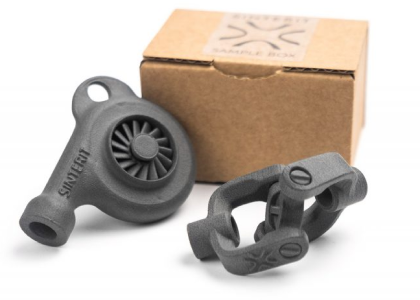
Injection molding is a traditional manufacturing technique where molten plastic is injected into a metal mold, then cooled to form a part. It’s highly efficient once tooling is in place and produces consistent, high-quality parts — but requires a significant upfront investment in mold fabrication, typically ranging from a few thousand to tens of thousands of dollars depending on part complexity and cavity count. In contrast, 3D printing is a digital-first, additive process. No molds, no tooling. The part is built layer by layer from digital files, enabling full geometric freedom and immediate design changes.
This flexibility makes 3D printing an ideal choice for prototyping, short runs, or parts with complex internal geometries that would be impractical — or impossible — to mold. On the other hand, injection molding dominates when it comes to mass production of thousands or millions of identical parts.
Cost comparison: 3D printing vs injection molding
When comparing costs, the volume of production is the defining factor. 3D printing has lower startup costs but higher cost per part. Injection molding has high upfront tooling costs, but the per-part cost drops dramatically at scale.
Typical cost dynamics:
- low-volume production (1–500 parts) — 3D printing is usually more economical,
- medium-volume (500–5,000 parts) — It depends on part geometry, tolerances, and material requirements,
- high-volume (5,000+ parts) — Injection molding typically wins due to amortized tooling costs and fast cycle times.
Still, 3D printing continues to chip away at this boundary. Improvements in printer speed, material variety, and process automation make it increasingly competitive — especially when factoring in design iteration, tooling delays, and warehousing.
Design freedom and iteration speed
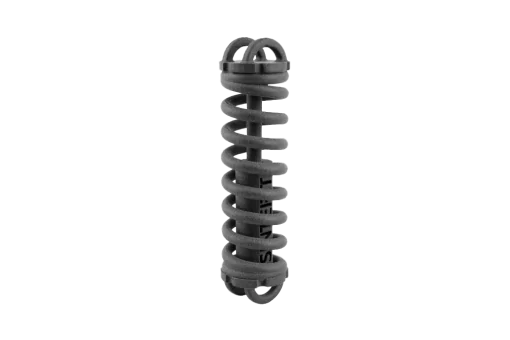
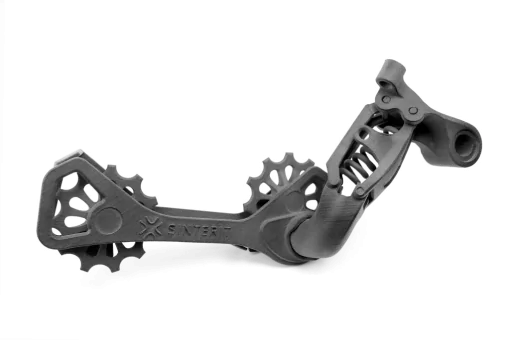
Design flexibility is a major differentiator. 3D printing supports undercuts, internal channels, organic forms, lattice structures, and functional assemblies in ways that injection molding simply can’t — at least not without extremely complex, expensive tooling.
This makes 3D printing the go-to for rapid prototyping, R&D, and custom or personalized products. It enables real-time iteration and validation without waiting weeks for new molds. Designers can test function and form earlier, accelerating time to market.
Surface finish, tolerance, and strength
Injection-molded parts are generally superior when it comes to surface finish, isotropy, and dimensional repeatability. The process delivers smooth surfaces right out of the mold and can hold tight tolerances for demanding applications.
3D printed parts — especially from FDM — often require post-processing to achieve similar results. SLA offers very high detail and smooth surfaces, while SLS provides strong, durable parts with a more textured finish. Both can approach injection-molding quality depending on post-processing, but typically still fall short in the most demanding high-precision or load-bearing applications. However, when designed with process-aware constraints, 3D printed parts can come remarkably close — especially in materials like PA12, PEKK, or reinforced composites.
Sustainability and material efficiency
3D printing tends to generate less material waste, especially with powder bed fusion systems where unused powder can be recycled. It also supports on-demand production, reducing the need for overstock and large inventories. Injection molding creates waste during sprue, runner, and gate trimming, although that waste can often be reprocessed.
However, injection molding may still be more energy efficient per part when running at full scale. Evaluating environmental impact depends on the specific materials, scale of production, and logistics involved.
Sustainability and material efficiency
The decision between 3D printing and injection molding is not a matter of better or worse — it’s about application fit. Consider:
- Are you prototyping or producing?
- How many units do you need — now and long term?
- How often will the design change?
- Do you need complex features or personalization?
- What is your budget for tooling, time, and labor?
| Feature | 3D printing | Injection molding |
|---|---|---|
| Startup cost | Low (no tooling required) | High (requires mold fabrication) |
| Per-part cost | High for large volumes | Very low at scale |
| Best for | Prototyping, custom parts, low-volume production | High-volume, mass production |
| Design flexibility | Very high (complex, nested, organic geometries) | Limited (depends on mold design) |
| Lead time | Hours to days | Weeks for tooling, then fast cycles |
| Surface finish | Varies by technology (SLA/SLS better than FDM) | Excellent (smooth, consistent) |
| Tolerances & repeatability | Moderate to high (depends on printer and process) | Very high |
| Material choice | Growing, but limited compared to molding resins | Wide range of thermoplastics |
| Sustainability | On-demand, less waste (esp. in powder-based tech) | Efficient at scale, but generates sprue waste |
| Tooling required | No | Yes |
Explore also
- Overview of 3D printing tech
- What is SLS printing?
- What is FDM 3D printing?
- What is SLA 3D printing?
- MJF 3D printing
- DLP 3D printing
- What is DMLS and SLM 3D printing?
- Binder Jetting
- Material Jetting
- PolyJet printing
- New 3D printing technology
Related categories