Austria
  Bosnia and Herzegovina
  Bulgaria
  Croatia
  Czech Republic
  Denmark
  Estonia
  Finland
  France
  Germany
  Greece
  Hungary
  Ireland
  Italy
Italy  Latvia
  Lithuania
  Poland
  Portugal
  Romania
  Slovakia
  Slovenia
  Spain
Spain  Sweden
  Switzerland
  United Kingdom
  Ukraine
  China
China  Hong Kong
  India
India  Israel
  Japan
Japan  Malaysia
  Philippines
  Saudi Arabia
  South Korea
  Taiwan
  Thailand
  Turkey
  United Arab Emirates
  Egypt
Egypt  South Africa
  Tunisia
  Canada
  Mexico
  United States
  Brasil
  Colombia
  Australia
  New Zealand
 New 3D printing technology
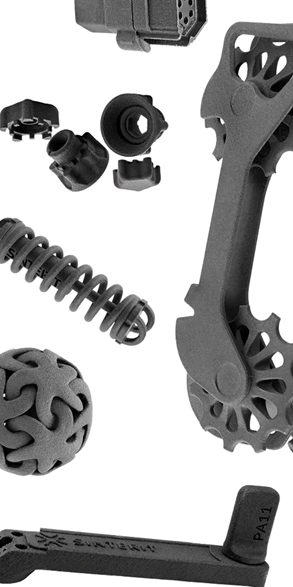
3D printing continues to evolve at a rapid pace. As the additive manufacturing industry matures, new technologies are emerging that challenge conventional limits in speed, material capability, surface finish, part size, and functional integration. These innovations don’t just tweak existing processes — they often redefine what’s possible in terms of how we design, produce, and use 3D-printed parts.
While traditional technologies like FDM, SLA, and SLS are still widely used, the next generation of 3D printing platforms is expanding the horizon across multiple dimensions: from advanced hardware and hybrid systems to AI-driven optimization and multi-material printing.
Beyond the basics: what “new” means today
The term “new 3D printing technology” doesn’t only refer to freshly launched machines — it also encompasses breakthroughs in process architecture, materials science, and digital control. Many of the most promising innovations are hybrids or enhancements of existing categories, optimized to meet industrial demands.
Key areas of advancement include:
- scalable production platforms — shifting 3D printing from prototyping to lights-out manufacturing.
- faster print engines — using light, heat, or optimized motion systems to radically reduce print times without sacrificing resolution,
- multimaterial and voxel-level control — enabling parts with embedded functionality, such as variable stiffness or conductivity,
- sustainable process integration — prioritizing material efficiency, closed-loop powder systems, and bio-based resins,
Emerging technologies to watch
Several new or evolving technologies are reshaping the capabilities of 3D printing across sectors. Among them:
- High-speed resin technologies (DLP evolution)
Digital Light Processing (DLP) has seen a dramatic upgrade through oxygen-permeable membranes and programmable light engines. New systems like Carbon’s CLIP and Nexa3D’s LSPc use continuous printing instead of layer-by-layer exposure. The result: parts printed up to 10× faster, with excellent surface finish and mechanical properties suitable for production.
- Binder Jetting for metals and ceramics
Binder jetting isn’t new, but its refinement for sinterable metals and advanced ceramics is transforming how manufacturers approach high-volume part production. Unlike laser-based systems, binder jetting decouples printing and densification — making it easier to scale, automate, and integrate into traditional supply chains. A key consideration is the significant shrinkage during sintering, typically 15–22%, which requires precise compensation during design and affects final tolerances.
- Hybrid manufacturing systems
Some of the most exciting innovations come from machines that blend additive and subtractive technologies. Hybrid platforms most commonly combine additive processes with CNC milling, especially in DED or metal AM systems. These systems streamline workflows, improve tolerances, and enable production of ready-to-assemble components in a single setup.
AI and closed-loop control
New 3D printing technologies increasingly rely on artificial intelligence and sensor feedback to optimize performance in real time. This is especially impactful in powder-bed fusion systems, where thermal management and recoating uniformity directly determine part quality. Machine learning models can now predict and correct print failures, adjust temperature and extrusion parameters on the fly, and even suggest part orientation or support strategies.
Closed-loop monitoring is especially critical in powder-based systems, where thermal uniformity and recoating consistency directly affect mechanical performance. AI-enhanced software is also beginning to influence the design phase, helping engineers generate parts that are natively optimized for additive processes.
Multi-material and functional printing
Another frontier is multi-material printing — especially at the voxel level. Instead of printing one material at a time, some emerging systems can also deposit elastomers, color pigments, or functional gradients, and in certain cases even limited conductive traces — though these capabilities remain in early commercial stages. This opens the door to smart products, embedded electronics, and functional gradients in a way that traditional manufacturing cannot replicate.
Although still in early commercial stages, technologies like PolyJet (from Stratasys) or voxel-level DLP platforms are setting the stage for functional, fully integrated parts straight off the printer.
The road ahead
As the industry shifts from prototyping toward full-scale production, new 3D printing technologies are focused on reliability, repeatability, and throughput. Emerging systems are not just faster — they’re smarter, more sustainable, and capable of handling complex geometries, materials, and functions with unprecedented precision.
Whether you’re a designer seeking finer detail, an engineer needing stronger materials, or a manufacturer looking for scalable automation — the next wave of 3D printing technologies offers new tools to solve problems in radically better ways.
📌 FAQ: new 3D printing technology
“New” typically refers to either recently launched systems or significant innovations that push beyond traditional FDM, SLA, or SLS. These include high-speed resin printing (e.g., CLIP, LSPc), binder jetting for metals, hybrid additive-subtractive systems, and AI-enhanced print control.
Aerospace, medical, automotive, and dental industries are leading adopters. They’re drawn to advanced capabilities like voxel-level material control, high mechanical precision, and speed — all critical for lightweight structures, patient-specific devices, or just-in-time manufacturing.
New-generation printers can be up to 5–10× faster, especially in resin technologies using continuous printing (like Carbon’s CLIP). Speed gains also come from optimized motion systems, smarter slicing algorithms, and parallelized workflows.
Binder jetting is a powder-based process where a liquid binder is deposited onto a powder bed to form parts. It’s gaining traction for metal and ceramic production because it allows for high throughput, cost-efficient scaling, and simpler post-processing compared to laser sintering.
Yes — multi-material printing is one of the most exciting frontiers. Printers using PolyJet or voxel-level DLP can mix resins or create parts with rigid and flexible sections, gradients, or even embedded electronics, all within a single build.
AI is being used to predict print failures, adjust settings in real time, optimize part orientation, and enhance slicing precision. Some platforms also integrate machine learning to recommend design improvements or predict stress hotspots based on geometry.
Hybrid systems — combining additive manufacturing with CNC milling, laser ablation, or inspection — are valuable in production environments where dimensional accuracy and surface finish are critical. They help reduce secondary operations and integrate directly into factory workflows.
New systems often require higher initial investment, steeper learning curves, and more advanced materials handling. There may also be limited material compatibility, software maturity issues, or a lack of proven workflows for specific applications.
Speed and sustainability. Continuous printing methods like LSPc and CLIP are being refined for production-grade applications, and manufacturers are pushing toward low-viscosity, plant-based resins to reduce environmental impact without compromising detail.
Not entirely. Established methods still have strong value in prototyping, education, and niche manufacturing. However, newer technologies are carving out space in industrial and medical-grade production — often supplementing, not replacing, the classics.
Explore also
- Overview of 3D printing tech
- What is SLS printing?
- What is FDM 3D printing?
- What is SLA 3D printing?
- MJF 3D printing
- DLP 3D printing
- What is DMLS and SLM 3D printing?
- Binder Jetting
- Material Jetting
- PolyJet printing
- 3D print vs injection molding
Related categories