Austria
  Bosnia and Herzegovina
  Bulgaria
  Croatia
  Czech Republic
  Denmark
  Estonia
  Finland
  France
  Germany
  Greece
  Hungary
  Ireland
  Italy
Italy  Latvia
  Lithuania
  Poland
  Portugal
  Romania
  Slovakia
  Slovenia
  Spain
Spain  Sweden
  Switzerland
  United Kingdom
  Ukraine
  China
China  Hong Kong
  India
India  Israel
  Japan
Japan  Malaysia
  Philippines
  Saudi Arabia
  South Korea
  Taiwan
  Thailand
  Turkey
  United Arab Emirates
  Egypt
Egypt  South Africa
  Tunisia
  Canada
  Mexico
  United States
  Brasil
  Colombia
  Australia
  New Zealand
 SLS 3D Printing for Prototyping: Overcoming 3 Prototyping Bottlenecks
Prototyping is rarely a linear process. Designs evolve, requirements change, and what initially seemed like a final concept often becomes just another iteration step. For engineering teams developing new products, the ability to quickly validate ideas and test different design variants is critical.
This is why Selective Laser Sintering (SLS) 3D printing has become one of the most powerful technologies for prototyping. It allows engineers to produce complex, durable parts without tooling and without the need for support structures.
If you are not familiar with the technology, you can learn more here:
https://sinterit.com/blog/sls-technology/
However, even with advanced additive manufacturing technologies, prototyping teams still encounter common bottlenecks that slow down development and limit experimentation.
In this article, we will look at three key challenges in prototyping and explain how Sinterit SLS solutions help engineering teams overcome them.

1. Prototyping Teams Don’t Want to Lock Themselves into One Material
The challenge
During product development, the required material properties often change over time. Early iterations may focus on validating geometry and assembly, while later prototypes require testing mechanical performance, flexibility, durability, or wear resistance.
When a 3D printing system is difficult to clean or switch between materials, teams often avoid experimenting with different powders. In many cases, this leads to two undesirable outcomes:
- teams postpone material validation until later development stages
- companies invest in additional machines dedicated to specific materials
Both scenarios reduce flexibility and increase the cost of prototyping.
How Sinterit addresses this challenge
Sinterit SLS printers are designed to support practical material switching in real engineering workflows.
This is achieved through several design decisions:
- Feed Bed architecture instead of gravity feed, making cleaning significantly easier
- easy access to replaceable components
- printer construction optimized for quick maintenance and cleaning
This makes changing powders significantly more manageable compared to systems where cleaning is extremely time-consuming or nearly impossible.
What this means for engineering teams
With easier material switching, teams gain:
- the ability to run multiple materials on a single printer
- freedom to experiment without committing to one powder
- reduced need for additional hardware investments.
This flexibility ensures that prototyping remains an exploratory process rather than a constrained workflow.
Real-world example: Innoseal
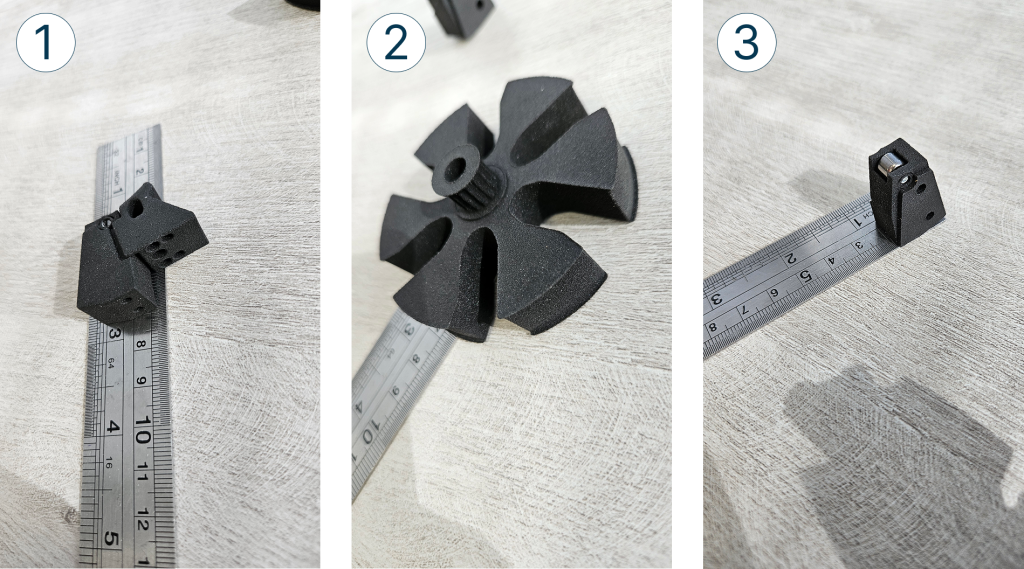
A good example of rapid prototyping flexibility comes from Innoseal Europe, a company developing packaging sealing solutions. Their engineering team uses SLS printing to quickly test new ideas and validate product improvements internally.
With in-house SLS printing, engineers can produce prototypes quickly and evaluate design iterations without waiting for outsourced manufacturing.
Read the full case study:
How Innoseal streamlined prototyping and small-batch production with Sinterit Lisa X
2. Limited Process Flexibility Slows Down Iteration
The challenge
Prototyping is fundamentally about testing and comparison. Engineers often need to evaluate multiple design variants that differ in:
- geometry
- material selection
- mechanical properties
- printing parameters.
When a printing system provides only rigid configurations or limited process control, it becomes difficult to compare different options efficiently. As a result:
- iteration cycles become slower
- fewer design alternatives are tested
- development decisions rely more on assumptions than validated data.
How Sinterit enables iterative development
Sinterit solutions are built to support continuous design experimentation.
Key capabilities include:
- a wide selection of SLS powders
- adjustable print parameters
- workflows that allow users to quickly adapt settings between builds
This flexibility allows engineering teams to run multiple experimental builds and evaluate results quickly.
Systems such as the Lisa X SLS 3D printer are specifically designed to support rapid engineering workflows and fast iteration cycles.
Learn more about the printer here:
https://sinterit.com/products/lisa-x/
What this means for users
With flexible process configuration, teams can:
- accelerate design iteration cycles
- compare multiple design approaches within a single development phase
- reduce uncertainty during engineering validation.
The result is faster product development and more informed design decisions.
Real-world example: Somfy
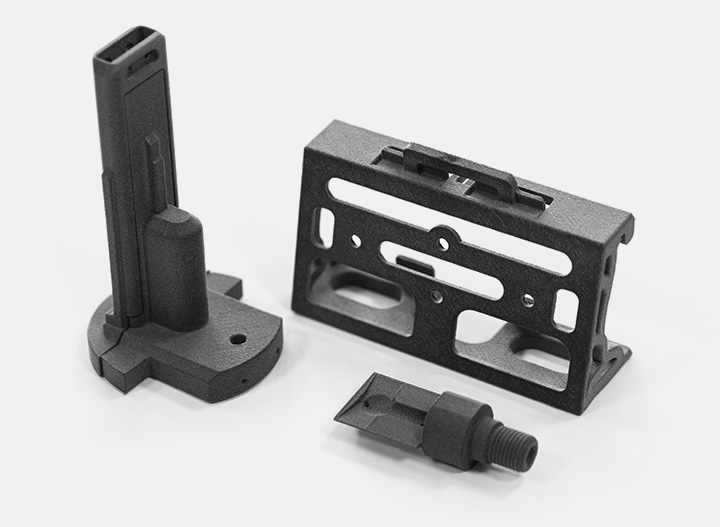
At Somfy, a global manufacturer of automation systems for homes and buildings, SLS printers were introduced directly into the R&D environment.
Previously, many prototypes were outsourced, which slowed the development process. By bringing SLS printing in-house, engineers gained the ability to quickly test new designs and iterate much faster.
Read the full case study:
Somfy reaches for productivity with Sinterit’s SLS technology
3. A Limited Material Portfolio Restricts Functional Testing
The challenge
In prototyping, geometry is only part of the equation. Engineers must also evaluate how a part behaves under real operating conditions.
Functional prototypes often require testing for:
- stiffness or flexibility
- impact resistance
- durability and fatigue resistance
- wear and mechanical stress.
When only a limited number of materials are available, prototypes may replicate the shape of a product but fail to represent its real-world performance.
How Sinterit supports functional prototyping
Sinterit offers a broad portfolio of SLS powders, allowing engineers to choose materials that match the requirements of their prototypes.
Explore available materials here:
https://sinterit.com/materials/
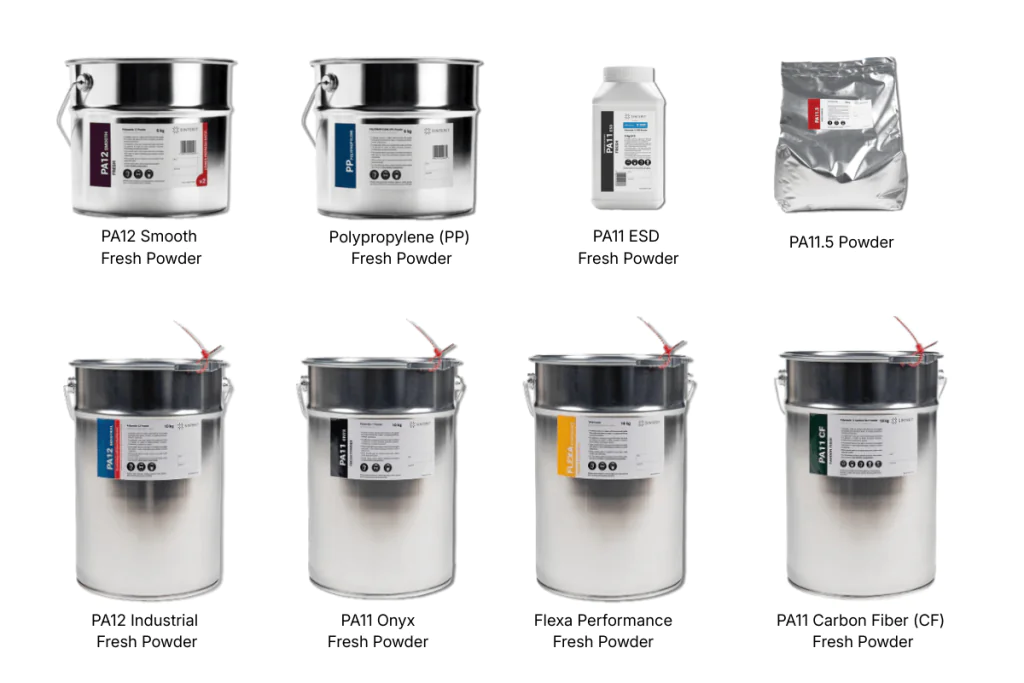
These materials provide different mechanical and functional characteristics, enabling engineers to test prototypes that simulate real product behavior more accurately.
What this means for product development
With access to a wide range of powders, teams can:
- create prototypes closer to real-world performance
- perform more reliable functional testing
- make better design decisions earlier in development.
Real-world example: Munich Motorsport
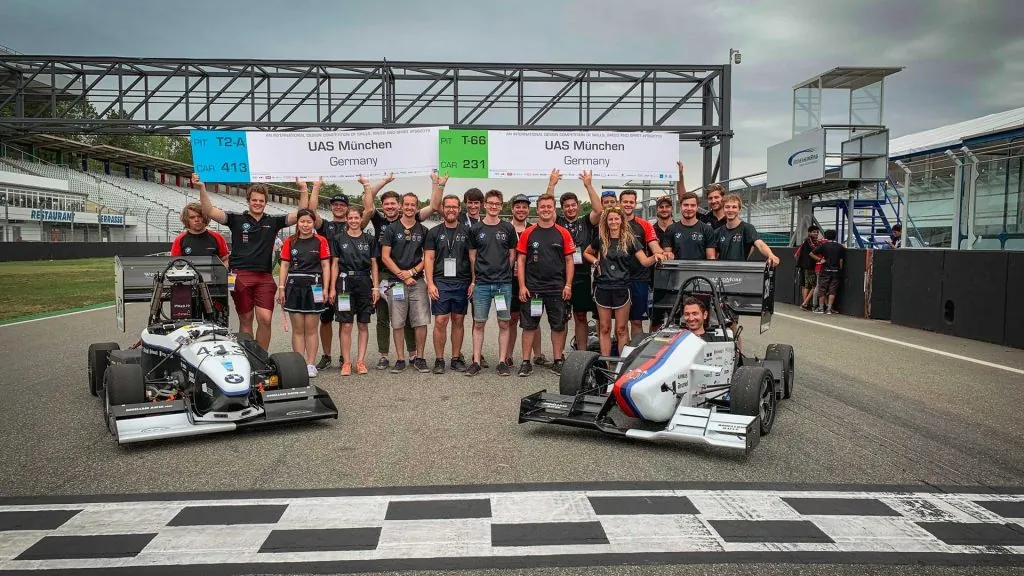
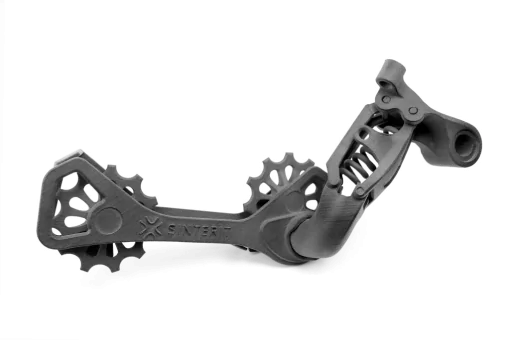
The importance of realistic prototypes is clearly visible in the Munich Motorsport project. The racing team used SLS technology to produce more than 100 components for their race car, allowing them to test different design variants quickly.
Rapid prototyping enabled faster optimization of components and faster validation of design improvements.
Read the full case study:
Over 100 printed parts in a racing car
Why These Advantages Matter in Real Prototyping Workflows
When engineering teams combine:
- easy material switching
- flexible process configuration
- a broad portfolio of SLS materials
they create a prototyping environment that truly supports innovation.
The result includes:
- faster iteration cycles
- earlier validation of functional performance
- fewer design compromises
- reduced prototyping costs
- greater freedom to evolve product concepts.
This makes SLS technology a powerful tool for companies working in automotive, robotics, electronics, industrial design, and advanced engineering development.
Typical Applications of SLS Prototyping
SLS technology is particularly well suited for prototypes that require:
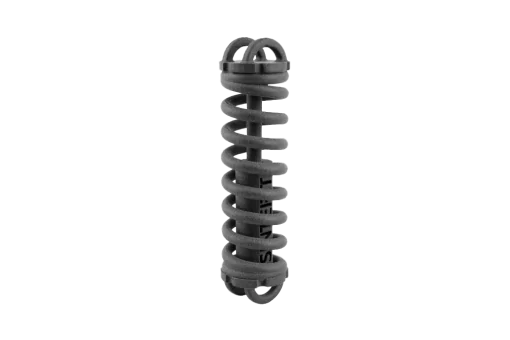
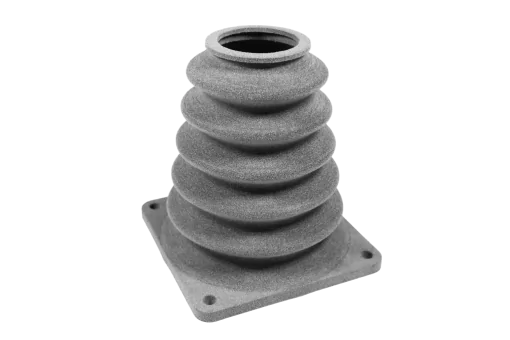
- complex geometries without support structures
- functional snap-fit components
- mechanical brackets and housings
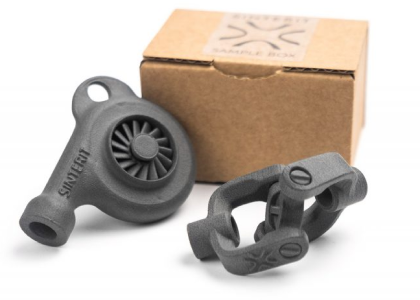
- airflow ducts and structural elements
- assemblies consisting of multiple interacting parts.
These capabilities allow engineering teams to test both form and function during the early stages of product development.
For more examples of real-world implementations, visit the Sinterit case studies library:
https://sinterit.com/case-studies/
FAQ: SLS 3D Printing for Prototyping
Why is SLS 3D printing good for prototyping?
Selective Laser Sintering is particularly effective for prototyping because it produces strong, functional parts without support structures. This allows engineers to create complex geometries and realistic mechanical components that closely resemble production parts.
What types of prototypes can be produced with SLS?
SLS can produce many types of engineering prototypes, including:
- functional mechanical parts
- enclosures and housings
- snap-fit components
- airflow ducts
- brackets, fixtures, and connectors.
Because parts do not require support structures, engineers can also prototype complex assemblies and moving mechanisms in a single build.
Can SLS prototypes be used for functional testing?
Yes. SLS materials provide strong mechanical properties, allowing engineers to test prototypes for:
- durability
- stiffness and flexibility
- wear resistance
- mechanical strength.
This makes SLS particularly useful for engineering validation before investing in tooling or mass production.
How fast can SLS prototypes be produced?
When using in-house SLS printing, functional prototypes can often be produced within hours or overnight, depending on the build size and number of parts.
This significantly reduces development time compared to outsourcing prototyping services.
Is SLS suitable for iterative product development?
Yes. SLS technology is ideal for iterative engineering workflows. Designers can quickly modify geometry, materials, or printing parameters and produce updated prototypes in the next build cycle.
This enables rapid experimentation and faster product development.
Conclusion
Effective prototyping requires flexibility, speed, and the ability to validate ideas quickly.
By combining easy material switching, adaptable printing workflows, and a wide portfolio of SLS powders, Sinterit solutions help engineering teams remove many of the traditional barriers to rapid prototyping.
The result is a development environment where engineers can experiment freely, test designs earlier, and confidently move from concept to validated product.
Let’s talk about your application
Have a specific application in mind?
Tell us about your application or prototyping challenges — our team will help you assess whether the Lisa X is the right solution.