Austria
  Bosnia and Herzegovina
  Bulgaria
  Croatia
  Czech Republic
  Denmark
  Estonia
  Finland
  France
  Germany
  Greece
  Hungary
  Ireland
  Italy
Italy  Latvia
  Lithuania
  Poland
  Portugal
  Romania
  Slovakia
  Slovenia
  Spain
Spain  Sweden
  Switzerland
  United Kingdom
  Ukraine
  China
China  Hong Kong
  India
India  Israel
  Japan
Japan  Malaysia
  Philippines
  Saudi Arabia
  South Korea
  Taiwan
  Thailand
  Turkey
  United Arab Emirates
  Egypt
Egypt  South Africa
  Tunisia
  Canada
  Mexico
  United States
  Brasil
  Colombia
  Australia
  New Zealand
 3D printing strongest material
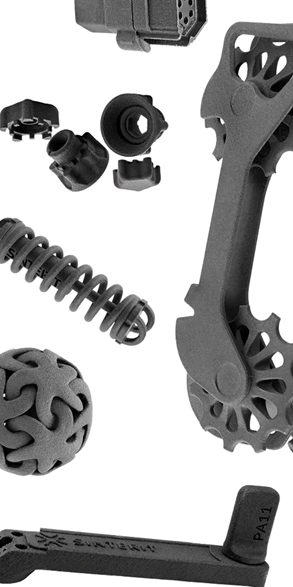
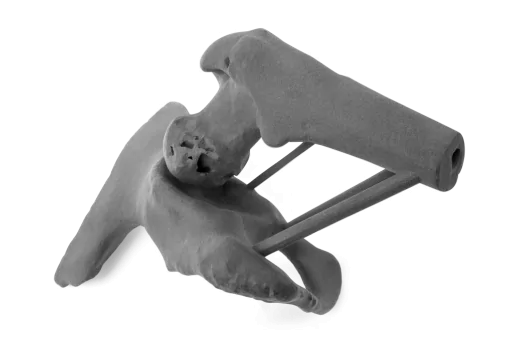
When we talk about the strongest material for 3D printing, it’s important to clarify what “strong” really means. Strength can refer to tensile resistance, impact durability, stiffness, heat deflection, or even layer adhesion. In additive manufacturing, strength isn’t defined by a single metric — it’s a blend of properties shaped by material type, printing technology, and part design. While many assume plastic parts are inherently weak, the truth is that modern 3D printing materials can rival or even outperform traditional injection-molded parts in select use cases. Among polymer materials, SLS-printed nylons such as PA12 are especially known for delivering high isotropic strength and exceptional durability in functional applications.
High-performance thermoplastics: industrial-grade strength
If we’re talking about plastics, few materials match the performance of PEEK (Polyether Ether Ketone) and ULTEM (PEI). These engineering polymers are used in aerospace, automotive, and medical applications where exceptional mechanical strength, thermal resistance, and chemical stability are required. PEEK, for instance, can maintain structural integrity at over 250°C and withstand extreme mechanical loads. However, these materials demand highly specialized printers with heated chambers and precise thermal control, making them less accessible for standard setups.
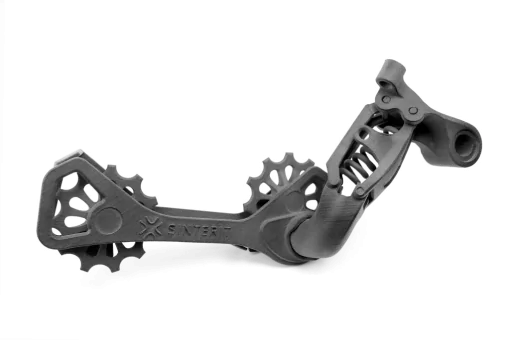
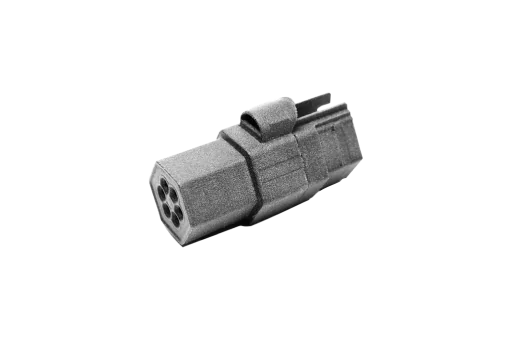
In the nylon family, PA12 (commonly used in SLS printing) strikes a strong balance between toughness, flexibility, and durability. In SLS systems, PA12 parts benefit from uniform strength in all directions, making them suitable for demanding load-bearing and production-grade applications. Its isotropic strength in powder bed fusion systems makes it ideal for load-bearing parts, enclosures, and functional prototypes. Carbon fiber-filled variants of PA12 or PA6 take things even further by boosting stiffness and strength while maintaining lightweight properties — which is why they’re frequently found in robotics, drones, and racing parts.
Metal 3D printing: strength without compromise
For the absolute strongest parts in additive manufacturing, metal powder bed fusion processes offer unmatched mechanical performance. Technologies like DMLS (Direct Metal Laser Sintering) and SLM (Selective Laser Melting) produce parts from titanium, stainless steel, Inconel, or aluminum alloys — offering mechanical performance that equals or exceeds CNC-machined metal parts. These materials are used in mission-critical aerospace components, medical implants, and high-temperature tooling.
Titanium, in particular, is prized for its unmatched strength-to-weight ratio and corrosion resistance, while Inconel is chosen for high-heat, high-pressure environments. Metal printing isn’t just about making something “strong”; it’s about creating parts that must perform flawlessly under extreme operational conditions.
Factors that influence strength in printed parts
Even the best material can fail if the print process isn’t properly optimized. The following factors play a major role in determining the actual strength of a 3D printed part:
- print orientation – parts printed with vertical layer lines are more prone to delamination under stress. proper orientation is key to reinforcing the right axes,
- infill density and shell thickness – a part with low infill or thin walls will naturally be weaker, regardless of material,
- layer bonding — powder bed fusion technologies like SLS and DMLS provide significantly stronger interlayer adhesion than FDM or SLA, which directly improves part strength and reliability,
- post-processing such as annealing, infiltration, or sintering can also enhance mechanical properties in both thermoplastic and metal prints.
Choosing the right strong material for your use case
There’s no one-size-fits-all answer to what is the strongest 3D printable material — it depends on the application. If you’re producing aerospace-grade brackets or engine parts, metal is the obvious choice. For industrial plastic parts exposed to stress or temperature, carbon-fiber PA12 or PEEK might be ideal. For general prototyping with good strength, SLS nylon delivers excellent performance without overengineering.
Ultimately, the smartest approach is to balance strength with printability, cost, and function. For many industrial applications, SLS PA12 offers one of the best overall strength-to-usability ratios, making it a practical choice for both prototypes and production parts.
Explore also
- Polymers in 3D printing
- 3D printing of metals
- Biocompatible materials for 3D printing
- Raw materials for 3D printing
- Composites 3D printing
- Recycled 3D printing filament
- 3D printing flexible
- Filament types for 3D printing
- What material does a 3D printer use?
- 3D printing shape memory polymer
- SLS ceramic
- SLS glass
- SLS wood
- Materials for SLS: guide
Related categories